Monthly Archives

March 2026

Hedgehog Inhibitors for Advanced Basal Cell Carcinoma

By Surgical Dermatology

hedgehog inhibitors for advanced basal cell carcinoma

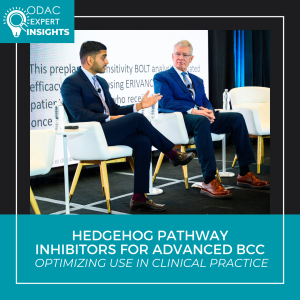
At the 2026 ODAC Conference, an expert panel led by Vishal A. Patel, MD, FACMS, and C. William Hanke, MD, MPH, FAAD, reviewed evolving strategies for hedgehog pathway inhibitors (HHIs) in advanced basal cell carcinoma (BCC), emphasizing practical clinical decision-making.

The discussion highlighted the two FDA-approved HHIs: vismodegib (approved in 2012 following the ERIVANCE trial) and sonidegib (approved in 2015 based on the BOLT trial). Reported objective response rates were 47% for vismodegib and 56.1% for sonidegib, with median durations of response of 9.5 months and 26 months, respectively. While cross-trial comparisons are limited, both agents demonstrated meaningful disease control and durable responses with continued therapy.

HHIs offer significant tumor shrinkage and may allow retreatment, but they are not typically curative. Common class-related adverse effects—including muscle cramps, dysgeusia, alopecia, and gastrointestinal symptoms—are usually low grade yet chronic, often affecting quality of life and adherence. Sonidegib’s longer half-life (28–30 days) compared with vismodegib (4–12 days) may influence toxicity duration and management decisions.

Clinically, HHIs are best used selectively:

  • As primary therapy for unresectable or inoperable BCC
  • As neoadjuvant therapy to reduce tumor burden before surgery or radiation
  • As bridge therapy to optimize cosmetic or functional outcomes

Even without complete tumor eradication, many patients achieve meaningful functional and cosmetic improvement. Ultimately, successful use of hedgehog inhibitors for advanced basal cell carcinoma depends on careful patient selection, proactive management of adverse effects, and thoughtful integration with surgery, radiation, and immunotherapy—expanding dermatologists’ options beyond surgical management alone.

This session summary was written by Dr. Erica Lin and published on Next Steps in Derm.

Skin Side Effects of GLP-1s: JDD Buzz

By Medical Dermatology

GLP-1 skin side effects

GLP-1 receptor agonists are widely used for type 2 diabetes and weight loss. Their growing use has increased the likelihood that dermatologists will encounter related skin concerns.

A recent analysis of the FDA Adverse Event Reporting System examined reported skin side effects of GLP-1s. The study, which was published in the Journal of Drugs in Dermatology, identified a broad range of dermatologic events. The most frequently reported were pruritus, nonspecific rash, injection-site reactions, urticaria, and alopecia. Hair loss was a particularly notable finding, as it is not widely recognized as a potential effect. Reports of hypersensitivity reactions, including urticaria and rare severe reactions, also suggest a possible immune-mediated component, according to one of the study’s authors, who elaborated on the findings in a Next Steps in Derm interview.

Skin side effects of GLP-1s were reported more often among patients using GLP-1s for weight loss, possibly reflecting higher doses, rapid weight changes, or increased reporting. While some variation in reporting existed among individual agents, the data cannot determine true comparative risk.

Because FAERS is a passive reporting system, the findings show associations rather than causation and likely underestimate true incidence. Overall, GLP-1 therapies remain safe and effective, but dermatologic reactions may be underrecognized.

The key takeaway for clinicians is to consider GLP-1 therapy as a potential contributing factor when evaluating new or unexplained skin findings and to counsel patients accordingly as use of these medications continues to expand.

New PDT Devices: ODAC Video Interview

By Video Pearls

new PDT devices

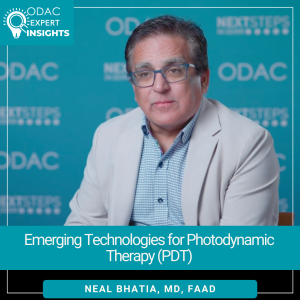
Photodynamic therapy (PDT) has a long history as a treatment option in dermatology, yet the modality may be on the cusp of a renaissance. Emerging technologies are entering the market. In this Next Steps in Derm video interview, Dr. Neal Bhatia outlines how these innovations enhance the patient experience, including reducing claustrophobia and treatment time. In addition, he shares how the devices increase PDT effectiveness, especially when treating the extremities.

If you’re not already offering PDT, you may want to reconsider once you watch this interview. Dr. Bhatia says these new devices make incorporating PDT easier. Watch as he shares his expertise on the best ways to schedule PDT as well as how long to let ALA sit on the skin for maximum benefit.