Monthly Archives

April 2026

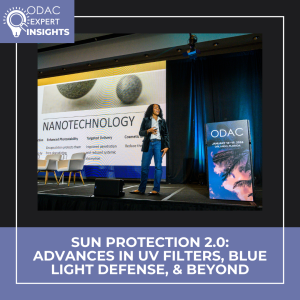
Advances in UV Filters, Blue Light Defense, & Beyond

By ODAC Sessions

sun protection

At ODAC, Misty Eleryan, MD, MS, FACMS, delivered a timely roadmap for Sun Protection 2.0 — reframing photoprotection beyond UV and into visible/infrared damage, formulation science, and personalized strategies.

Key takeaways:

  • Photodamage spans UVA/UVB, visible light, and infrared — explaining why some patients still photoage despite diligent sunscreen use.
  • White cast from mineral sunscreens undermines adherence; improving texture and cosmetic elegance is a public-health priority.
  • Innovation is underway: nanotechnology for photostability and reduced absorption, antioxidants (vitamins C/E) to neutralize reactive oxygen species, sunscreen “boosters,” and potential biotech discovery of novel UV filters.
  • Regulatory reality: no new US filters since 1999. The 2025 SAFE Sunscreen Standards Act may finally accelerate safe, globally informed approvals.
  • Emerging tools: wearable UV sensors, topical cannabidiol research, and oral photoprotective supplements like polypodium.

Practical message: Sunscreen remains the foundation, but photoprotection must be multifaceted, involving product choice, behavior, nutrition, and emerging tech. Dermatologists should lead these conversations to improve adherence and outcomes.

Read the full session summary written by Milaan Shah, MD, to explore formulation advances, policy shifts, and actionable counseling tips you can use with patients today.

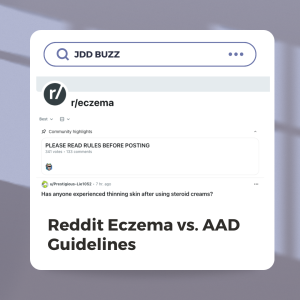
Reddit Eczema vs. AAD Guidelines: JDD Buzz

By Medical Dermatology

Reddit eczema

When patients tell you they “Googled it” or turned to Reddit, it’s tempting to sigh. However, these forums are where many patients first learn about their skin condition. A new JDD study compared top posts from r/eczema with the latest AAD atopic dermatitis guidelines and the results are both sobering and useful for clinicians.

Highlights:

  • Posts with more misinformation tended to diverge from guideline recommendations, yet many attracted high engagement.
  • Higher upvote percentages correlated with greater guideline alignment — community signals can help surface evidence-consistent advice.
  • Readability did not predict accuracy: clear writing isn’t always correct.

Importantly, r/eczema also offers peer support, exposure to emerging therapies, and practical tips that can empower patients. For clinicians, that’s an opportunity: Learn the narratives patients encounter, proactively address misconceptions, and tailor education to individual needs.

Rather than dismissing patient-sourced knowledge, use it to strengthen communication, build trust, and improve shared decision-making. Read a Next Steps in Derm commentary with one of the study’s authors to explore the study’s methods, findings, and practical strategies for bridging clinic care with online patient communities.

Rethinking Prurigo Nodularis: ODAC Session Summary

By ODAC Sessions

prurigo nodularis

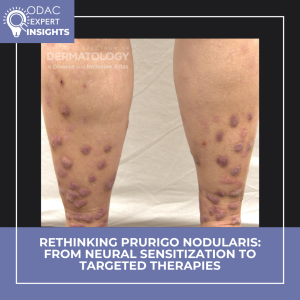
At ODAC 2026, Adam Friedman, MD, FAAD, shared a prurigo nodularis (PN) case that might feel familiar: multiple nodules, relentless itch, one question — why? His message: PN is not merely scratching or a bystander to other dermatoses. It’s a distinct neuroimmune disorder with systemic implications, and overlap does not mean sameness.

PN is sustained by a maladaptive neuroimmune loop: IL‑31 drives itch via sensory neurons, periostin amplifies neural signaling and keratinocyte inflammation, and chronic scratching remodels skin and nerves. Clinically this maps to two meaningful subtypes — inflammatory‑predominant and neuropathic‑predominant — which helps explain variable responses to therapy.

Management goals are simple: reduce itch, interrupt the itch‑scratch cycle, and heal lesions. Tools span topical agents (emerging data for ruxolitinib), neural modulators (gabapentin, pregabalin, mirtazapine), adjuncts like PEA, targeted biologics (nemolizumab), and evolving JAK inhibitors. Expectation setting is key: control, not cure, and “stay on to stay clear” for many patients.

PN often coexists with systemic disease and lifestyle factors that compound burden and reduce quality of life. As mechanism‑driven therapies expand, identifying phenotype and personalizing combinations will improve outcomes.

Read the full session summary, written by Tammy Gonzalez, MD, PhD, to dive into Dr. Friedman’s practical framework and therapeutic insights.

Behind the Bottle Part Deux: JDD Podcast LIVE

By Medical Dermatology

sensitive skin

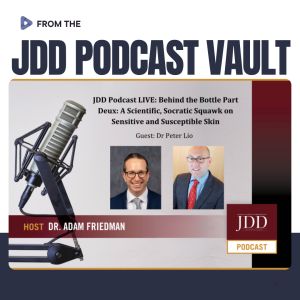
If you were at ODAC 2026, you already felt the electricity in the room — and now the JDD Podcast is capturing that energy. For its milestone 100th episode, the JDD Podcast returns with Part 2 of “Behind the Bottle,” hosted by Adam Friedman, MD, FAAD, and recorded live in front of ODAC attendees. Building on the first installment with Peter A. Lio, MD, FAAD, this episode pulls back the curtain again on how clinicians can thoughtfully navigate the ever-expanding OTC universe.

Why this episode matters:

  • Two timely, frequently misunderstood conditions take center stage: sensitive skin syndrome and dermatoporosis. Both are becoming increasingly common in clinical practice and yet are often misunderstood.
  • The conversation is practical and evidence-driven. Dr. Friedman and Dr. Lio dissect the underlying biology, clinical presentation, and real-world management challenges clinicians face when recommending products or designing care plans.
  • It’s the JDD Podcast you know — a smart mix of preclinical and clinical data, pragmatic pearls you can use on Monday morning, and Dr. Friedman’s signature wit.

What you’ll take away

  • Clear frameworks for recognizing and diagnosing sensitive skin syndrome — a state of cutaneous hyperreactivity marked by stinging, burning, and barrier dysfunction — so you can separate subjective complaints from objective disease and tailor recommendations accordingly.
  • Practical approaches to managing dermatoporosis (yes, the “osteoporosis of the skin”) — from identifying at-risk patients to minimizing fragility, tearing, and impaired wound healing in an aging population.

This episode is essential listening for dermatologists, dermatology trainees, advanced practice providers, and any clinician who wants to make smarter, more confident product recommendations and care decisions — especially those treating older adults or patients with reactive skin.

The episode is available now on the JDD Podcast feed and wherever you get your podcasts. Listen, subscribe, and share with colleagues who could use a clearer roadmap for sensitive skin and dermatoporosis.