
If you’ve spent time in clinic recently, you’ve undoubtedly heard it. A patient points to a newly gaunt appearance and asks, “Is this because of my weight loss medication?”
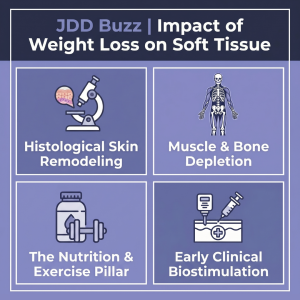
While the social media buzz around “Ozempic face” dominates patient conversations, the clinical reality is far more nuanced. A narrative review in the Journal of Drugs in Dermatology evaluated the evidence behind the impact of rapid weight loss on soft tissue and shared guidance for dermatologists in counseling and treating weight loss patients.
In an interview with Next Steps in Derm, authors Sam Fathizadeh, BS, Dr. Melanie D. Palm, and Dr. Deirdre Hooper address the “attribution bias,” where patients—and even some clinicians—frequently blame GLP-1 drugs directly for skin laxity and volume loss. However, studies comparing bariatric surgery, dietary changes, and GLP-1 therapies show broadly similar effects on soft tissue. The primary driver of these changes is the rate and magnitude of rapid weight loss itself, regardless of the method.
The review highlights one area where GLP-1 agents may have a drug-specific effect: dermal white adipose tissue (dWAT). This specialized fat layer is closely integrated with the dermis and directly impacts skin thickness and facial volume. Early data suggests GLP-1 signaling may influence dWAT independently of overall fat loss—a key area of ongoing research for dermatologists.
Questions about weight loss and soft tissue will only multiply as GLP-1 indications expand. Check out the full interview and dive into the original article in the Journal of Drugs in Dermatology to stay ahead of the curve.
