
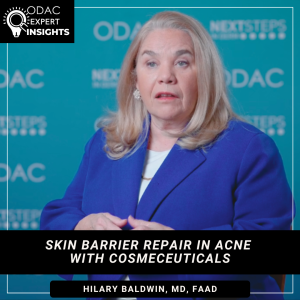
Acne is a barrier deficiency disorder, according to Brooklyn, N.Y., dermatologist Dr. Hilary Baldwin. Next Steps in Derm, in partnership with the ODAC Dermatology Conference, interviewed Dr. Baldwin, who addresses the role of skin care in acne improvement. Find out why better products and vehicles could be the reason for the increasing placebo effect in acne studies. Find out the impact of acne treatments on the skin barrier and how this affects non-compliance. Hear what Dr. Baldwin says must happen in every acne visit. Plus learn the origin of the new term “acneceuticals” and what the latest research shows on the role of non-prescription active ingredients in acne care.
Further Reading
If you want to read more about cosmeceuticals for acne, check out the following articles published in the Journal of Drugs in Dermatology:
ABSTRACT
Background: Acne is a multifactorial inflammatory skin condition that commonly presents to the dermatology clinic. Treatment generally involves the use of pharmaceutical agents and procedural techniques. Recently, the importance of over-the-counter skin care in acne
has been recognized in many studies. This paper introduces the term acneceuticals to encompass a wide range of FDA monographed, yet non-prescription ingredients proven to alter the structure and function of acneic skin.
Methods: A panel of 8 dermatologists with an interest in acne and skin care performed a literature review of active skin care in acne. The role of acneceuticals in the treatment of acne — as monotherapy, adjunctive, and maintenance therapy — was evaluated using a modified Delphi approach. Studies were limited to in vivo human trials involving acne. Individual actives were assessed separately.
Results: The quality of evidence was moderate-to-low for many of the ingredients. Most of the actives included in the final assessment had been studied in vehicle-controlled, blinded, often comparative studies but enrolled a small number of subjects. In these studies, the acneceuticals were found to reduce lesion count, reduce sebum production, and improve efficacy of existing pharmacologic therapies.
Conclusion: Acneceuticals have demonstrated benefits in treating acne, alone or in conjunction with established pharmaceutical agents. These data allow us to make quality recommendations for our patients that should be a part of every patient encounter. The recommendations also serve as a guide for patients searching the internet for beneficial self-care products.
ABSTRACT
Background: Acne vulgaris is a common, multifactorial inflammatory skin disease for which there are many pharmacologic and procedural interventions. Recent publications have stressed the importance of quality skin care containing non-prescription actives (acneceuticals) in the treatment of this chronic disorder. Acne therapy is made more complicated by the diversity of presentation that includes age, gender, race, underlying skin type, product adherence, lesion morphology, and severity.
Methods: A panel of 6 dermatologists with expertise in the treatment of acne met twice for consensus conferences in March and November 2024. Discussion included the generation of 13 common disease presentations, the identification of potential cases to illustrate the presentations, and the design of 2-month case studies utilizing acneceuticals. Panelists chose new or established patients in their care who fit into the predetermined categories, provided them with the agreed-upon acneceuticals, and followed them for 2 months.
Results: Ten cases were chosen to comprise the most common therapeutic crossroads where pharmacologic or procedural interventions were not providing satisfactory control. This case study series included patients who were medication-intolerant, failing internet cures, not fully responsive to their current regimen, adult female acne patients with concomitant aging concerns, those needing maintenance therapy, and patients with issues regarding access to care.
Conclusions: Acneceuticals were found to play an important role as monotherapy, adjunctive therapy, and maintenance therapy for acne patients. The 10 cases elucidated the ability of these over-the-counter (OTC) actives to improve patient care under several clinical scenarios.
Did you enjoy this video interview? Find more here.