

Tag

topical JAK inhibitors

Topical Nonsteroidal Therapies for Atopic Dermatitis

By Patient Care

topical nonsteroidal therapies

A new consensus in the Journal of Drugs in Dermatology recommends advanced nonsteroidal topicals — topical JAK inhibitors, aryl hydrocarbon receptor agonists, and PDE‑4 inhibitors — as frontline therapy for AD over traditional topical corticosteroids.

In an interview with Next Steps in Derm, author Christopher Bunick, MD, PhD, shares the panel’s evidence‑based process, graded recommendations, and practical implications for clinic.

Why this matters:

  • These agents offer improved efficacy and safety vs. steroids, especially on thin or sensitive skin (face, folds, genitalia).
  • They better control itch, inflammation, and barrier dysfunction — translating to real gains in sleep and quality of life.
  • Their safety profile supports longer‑term use and easier patient adherence.
  • The consensus provides actionable guidance on where nonsteroidal topicals fit alongside biologics and small molecules.

This interview is a must‑read to update your treatment algorithms and patient counseling.
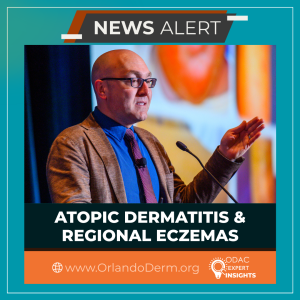
AD and Regional Eczemas: ODAC in the News

By ODAC Sessions

AD and regional eczemas

At the ODAC Dermatology Conference, Peter Lio, MD, FAAD, shared an updated, patient-centered overview of atopic dermatitis (AD) and regional eczemas, integrating emerging science with real-world clinical strategies.

As noted in an article by The Dermatology Digest, Dr. Lio emphasized AD and regional eczemas are self-perpetuating disorders involving the skin barrier, immune system, microbiome, and sensory nerves. He outlined the epithelial barrier hypothesis and the concept of epicutaneous sensitization. Early, proactive intervention was framed as essential to preventing chronic inflammation, infections, and subsequent disease.

On therapy, Dr. Lio reviewed the expanding role of non-steroidal topical agents, noting their usefulness in sensitive areas and for patients who want a non-steroidal option. He also reinforced the value of adjunctive strategies such as wet wrap therapy. For systemic treatment, he discussed biologics and oral JAK inhibitors, highlighting evidence that dupilumab can uniquely improve the skin microbiome in moderate-to-severe AD. Shared decision-making was a central theme, with Dr. Lio presenting his ESTAR framework to help align treatment choices with patient priorities, and sharing the importance of written action plans.

Finally, Dr. Lio addressed topical steroid withdrawal as a legitimate and evolving diagnosis. He noted that formal diagnostic criteria are forthcoming, signaling progress toward clearer guidance for clinicians.