Tag

dermatology conference

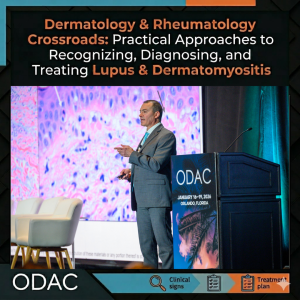
Recognizing and Treating Cutaneous Lupus and Dermatomyositis

By ODAC Sessions

autoimmune connective tissue disorders

At the ODAC Dermatology Conference, Anthony Fernandez, MD, PhD, FAAD, shared his experience in autoimmune connective tissue disorders, highlighting the intersection between dermatology and rheumatology, and underscoring the importance of practical approaches in complex diseases.

Cutaneous Lupus

Dr. Fernandez began his session by addressing cutaneous lupus, stressing the need to recognize lesion patterns. “If you become familiar with the morphology of the skin lesions and the pattern of distribution, you should be able to recognize lupus and dermatomyositis.”

Regarding acute cutaneous lupus, he noted that, “All of these patients have systemic lupus erythematosus (SLE), so [they] are going to have a positive ANA and usually numerous positive anti-ENA antibodies.” However, he also cautioned, “Not every patient has a classic butterfly rash, so you need to look at the entire clinical picture.”

For subacute cutaneous lupus (SCLE), he emphasized photosensitivity. “Annular scaly lesions or psoriasiform lesions in a photo-distribution are a hallmark. About 25-40% of these patients may develop SCLE because of a medication they’re taking, so you need to perform a good medication history upon diagnosis.”

Chronic cutaneous lupus, particularly discoid lupus (DLE), carries unique implications. “A negative ANA does not rule out cutaneous lupus, especially with discoid lesions,” he stressed. “Patients with generalized discoid lupus, meaning they have lesions both above and below the neck, are at increased risk for progressing to SLE compared to patients with DLE lesions only above the neck.”

Dr. Fernandez advised antimalarials, hydroxychloroquine, and chloroquine as first-line systemic treatments for cutaneous lupus. “If a patient fails the first antimalarial, there is research supporting that switching to the alternative antimalarial may be effective in a significant percentage of cases.”

Dermatomyositis

Turning to dermatomyositis, Dr. Fernandez highlighted hallmark cutaneous features: heliotrope rash, Gottron’s papules, shawl sign, V-neck sign, and holster sign. He noted that any combination of these features may occur in patients with dermatomyositis, and cautioned about MDA5-positive disease. “These patients often present with skin lesions due to vasculopathy. There is a very strong risk of interstitial lung disease (ILD). Some may have a rapidly progressive ILD phenotype, which can be life-threatening despite aggressive treatment.”

For diagnosis, he recommended combining clinical and objective data. “You need to correlate what you see clinically with some objective data, mainly a lesional skin biopsy with histopathologic characteristics consistent with lupus or dermatomyositis.” He also advised autoantibody testing. “For dermatomyositis, myositis-specific autoantibodies correlate with clinical phenotype, so they have tremendous value in terms of how you test, monitor, and treat these patients.”

For treatment, Dr. Fernandez recommended typically starting with corticosteroids plus a steroid-sparing agent. “If patients fail traditional agents, IVIG is far and away the best medicine we currently have for treating the skin, myositis, or both.”

Looking ahead, he concluded with excitement about emerging therapies. “Oral JAK inhibitors, anti-interferon receptor monoclonal antibodies, and anti-interferon-beta monoclonal antibodies may be the first truly novel medicines that get approved for dermatomyositis in decades, depending upon results of ongoing phase 3 trials.” He conveyed to attendees, “Once you make a diagnosis, we currently have good medicines to offer, but the real excitement is what’s in the pipeline right now.”

This information was presented at the 2026 ODAC conference by Anthony Fernandez, MD, PhD, FAAD. The above highlights from this lecture were written and compiled by Samip Sheth, MD.
Evaluating Skin Findings of Systemic Disease

By ODAC Sessions

skin findings of systemic disease

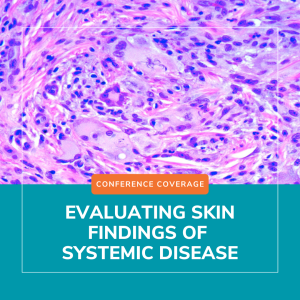
At the 2026 ODAC Dermatology Conference, attendees had the opportunity to learn about evaluating skin findings of systemic disease from Olayemi Sokumbi, MD, FAAD, professor of dermatology and laboratory medicine & pathology at Mayo Clinic. Dr. Sokumbi shared her expertise about evaluating skin findings that may occur in the context of systemic illness, emphasizing a structured derm-dermpath approach. Through two illustrative cases, she demonstrated how the skin serves as an early window to systemic disease and how clinicopathologic correlation (CPC) is integral to establishing the correct diagnosis.

Case 1:

Dr. Sokumbi described a gentleman in his 50s who presented with skin-colored papules on the ears accompanied by joint pains. The presence of concurrent systemic symptoms raised suspicion for an underlying systemic process, prompting a skin biopsy. Histopathology revealed foamy xanthomatous histiocytes, suggesting a non-Langerhans cell histiocytosis with inflammatory arthritis such as Erdheim-Chester disease (EDC). However, at least half of cases of EDC cases demonstrate a BRAF V600E mutation.1 Staining of this skin biopsy was negative for this mutation, prompting Dr. Sokumbi to return to the bedside and broaden the differential diagnosis. Subsequent physical examination revealed periungual papules and nodules, in a characteristic “coral beading” pattern, leading to the diagnosis of multicentric reticulohistiocytosis (MRH), a condition also associated with severe polyarthritis. The histopathologic pitfall requiring CPC was the presence of xanthomatized histiocytes, which are typical for EDC and underrecognized in MRH due to the rarity of this finding. Accurate diagnosis carries significant clinical implications, as MRH has a strong association with solid organ malignancy and requires therapeutic approaches distinct from those used in EDC.

Case 2:

Dr. Sokumbi presented the case of a young lady with diffuse cutaneous hyperpigmentation, which multiple providers had attributed to dermatoheliosis or photoaging. She highlighted, however, key photoprotected areas, such as the conchal bowls of the ears, also demonstrated blue-gray discoloration. The clinical differential diagnoses included lichen planus pigmentosus and argyria, yet the characteristic histopathologic features of these entities were not present on skin biopsy.

Instead, histologic examination revealed wavy deposits within the dermis that stained basophilic on Hematoxylin and Eosin and blue-black with Verhoeff Van Gieson (VVG) staining. Basophilic collagen fibers and altered deposits of elastic fibers have been reported as early-stage findings of ochronosis,3 in contrast to the classic late-stage yellow-brown banana-shaped collagen fibers. Based on these findings the patient was diagnosed with endogenous ochronosis/alkaptounuria, a genodermatosis characterized by impaired breakdown of tyrosine and phenylalanine.

In conclusion, Dr. Sokumbi emphasized how dermatologists are often uniquely positioned to diagnose systemic disease through careful evaluation of skin findings. Both cases underscored the importance of CPC. She encouraged repeating skin biopsies when the leading diagnosis remains unclear and collaborating with colleagues across specialties to ensure comprehensive management of systemic disease.

This session summary was written by Nagasai Adusumilli, MD, MBA, chief resident physician in dermatology at the George Washington University School of Medicine and Health Sciences.

References

  1. Haroche J, Cohen-Aubart F, Emile JF, et al. Reproducible and sustained efficacy of targeted therapy with vemurafenib in patients with BRAF(V600E)-mutated Erdheim-Chester disease. J Clin Oncol. 2015 Feb 10;33(5):411-8. PMID: 25422482.
  2. Camargo K, Pinkston O, Abril A, Sluzevich JC. Xanthomatous multicentric reticulohistiocytosis: an underrecognized variant. J Clin Rheumatol. 2018 Aug;24(5):285-287. PMID: 29239933.
  3. Chowdary S, Mahalingam M, Vashi NA. Reading between the layers: early histopathological findings in exogenous ochronosis. Am J Dermatopathol. 2014 Dec;36(12):989-91.PMID: 25415140.

ODAC Expands Advisory Team

By ODAC Sessions

ODAC Advisory Team

The ODAC Advisory Team is growing!

Jennifer Soung, MD, FAAD, will serve as a medical dermatology advisor. Dr. Soung is a dermatologist in private practice in Santa Ana, Calif., and an associate professor at Harbor-UCLA Medical Center.

“Education has always been at the heart of my work in dermatology, and I have long believed that high-quality education is the foundation of exceptional patient care,” Dr. Soung says. “As ODAC’s medical dermatology advisor, I’m excited to collaborate with the advisory team to further strengthen medical dermatology education—bringing evidence-based insights, clinical relevance, and my enthusiasm, expertise, and genuine joy for dermatology to colleagues across the field.”

Vishal A. Patel, MD, FACMS, will serve as a conference co-chair. Dr. Patel, a longtime faculty member, was previously ODAC’s guest advisor for surgical dermatology. He is an associate professor of dermatology and director of the Cutaneous Oncology Program at GWU School of Medicine & Health Sciences.

“I’m honored to step into the role of ODAC conference co-chair and help shape the next chapter of this remarkable meeting,” Dr. Patel says. “Serving as a special advisor has been a privilege, and I’m proud of the work we’ve already done to elevate the conference’s impact. I’m excited to build on that momentum by expanding our surgical dermatology and cutaneous oncology offerings with innovative, practical education that empowers clinicians to elevate patient care.”

ODAC Conference Co-Chair Adam Friedman, MD, FAAD, says these changes to the ODAC Advisory Team make for an exciting time for ODAC. “In Dr. Patel’s expanded role as co-chair, and Dr. Soung as medical advisor, they will no doubt further strengthen ODAC’s mission to deliver innovative AND practical education that truly meets the needs of today’s dermatology community.”

“ODAC continues to evolve with the times as dermatology changes,” says ODAC Conference Co-Chair Susan H. Weinkle, MD, FAAD. “We are proud to have Drs. Patel and Soung in their new roles on the advisory team as we continue to enhance our surgical and medical dermatology offerings. This is a forward-thinking change that will lead to improved patient care.”

Save the Date! ODAC 2027 will take place Friday, January 15, through Monday, January 18, 2027, in Orlando at the Signia by Hilton Orlando Bonnet Creek.

The Dermatology Digest: ODAC 2025 Coverage on CSU

By Media Coverage

chronic spontaneous urticaria

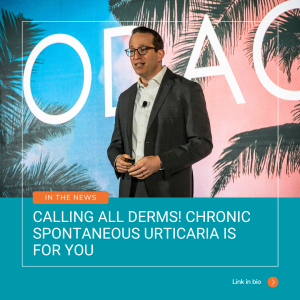
ODAC Dermatology Conference Co-Chair Adam Friedman, MD, FAAD, says chronic spontaneous urticaria (CSU) is one skin condition that should belong in a dermatologist’s wheelhouse.

“CSU is for you,” Dr. Friedman says in a video interview with The Dermatology Digest. Find out what Dr. Friedman says dermatology clinicians should know about this unique, disabling condition.

Learn what qualifies as CSU, and why Dr. Friedman uses the phrase, “talk more, lab less,” when approaching a patient with CSU. Find out about therapeutic options, including when to consider omalizumab. Plus hear about off-label therapies.

Register now for ODAC 2026 and learn more expert approaches in medical dermatology.

Current Challenges & Knowledge Gaps in Treating Vitiligo

By Medical Dermatology

vitiligo treatment

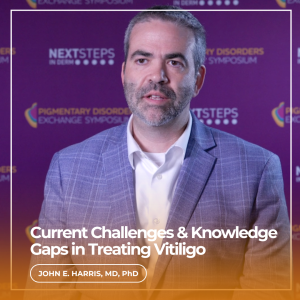
June is Vitiligo Awareness Month. Understanding the current challenges and knowledge gaps in treating vitiligo was one of the topics addressed at ODAC’s sister conference, the Pigmentary Disorders Exchange Symposium.

In a video interview with Next Steps in Derm, vitiligo expert John Harris, MD, PhD, explains how these knowledge gaps impact a patient’s experience, including treatment expectations. Watch and find out why encouragement, persistence, and patience are three keys to treating this pigmentary disorder.

Register for ODAC 2026 and learn the latest in treating vitiligo and other pigmentary conditions.

A First-Time Attendee’s Experience at ODAC 2025 from Next Steps in Derm

By Media Coverage, ODAC Sessions

Dermatology Conference for Young Dermatologists

Dr. Kala Hurst recently attended ODAC dermatology conference and published her experience on Next Steps in Derm.

A First-Time Attendee’s Experience at ODAC 2025: A Conference Worth Attending
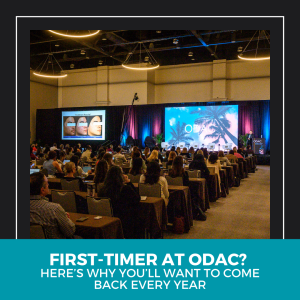
As a first-time attendee at the 2025 ODAC Dermatology Conference, I was beyond impressed with my experience. From the expertly curated sessions to the invaluable networking opportunities, ODAC delivered an immersive and engaging educational experience. If you are considering attending in the future, let me assure you it is absolutely worth it.

A Dynamic Learning Experience
ODAC Dermatology Conference’s structure kept attendees engaged with a series of one- to two-hour sessions, each consisting of digestible 15- to 20-minute presentations. These talks, led by renowned experts in dermatology, covered a diverse array of cutting-edge topics, including new treatments for alopecia, breakthroughs in systemic medications, and advances in the management of neutrophilic dermatoses. The high-yield nature of these sessions ensured that attendees walked away with practical pearls they could immediately apply in their practice. My notebook was filled with valuable insights and takeaways from the sheer volume of groundbreaking information presented.

Hands-On Learning: Live Demonstrations and Workshops
Beyond lectures, ODAC offered a hands-on approach to learning through live demonstrations and workshops. Watching expert injectors perform filler and botulinum toxin injections provided attendees with real-time insight into advanced aesthetic techniques. The workshops on deroofing for hidradenitis suppurativa, suturing techniques, and wound dressings all led by specialists in the field, were particularly enlightening, offering step-by-step guidance. These interactive sessions allowed attendees to gain confidence in procedures that they may not have been exposed to in residency or everyday practice.

Unparalleled Networking Opportunities
ODAC Dermatology ConferenceOne of the standout aspects of ODAC was its emphasis on networking. The conference’s exhibit hall featured an impressive array of pharmaceutical, OTC, and device companies showcasing the latest in dermatologic treatments and technologies. But what truly set ODAC apart was the intimate networking events, such as coffee talks with faculty and session leaders. These informal gatherings provided the rare opportunity to engage with thought leaders in dermatology, ask candid questions, and learn more about their professional journeys. As a dermatology resident, I found these discussions particularly inspiring and valuable in shaping my career path.

Resident-Focused Programming
This dermatology conference demonstrated a strong commitment to resident education through dedicated sessions tailored to the unique needs of those in training. The Derm In-Review Board Review sessions covered all major dermatology topics, offering an excellent opportunity for residents to reinforce their knowledge. Additionally, a newly introduced session on engaging with industry and expanding professional networks was met with great enthusiasm. Many residents took full advantage of this opportunity to connect with industry leaders, ask about non-traditional career paths, and explore potential collaborations beyond clinical practice.

Why You Should Attend ODAC
If you’ve been contemplating whether ODAC is worth attending, I can confidently say that it is. Not only is the conference set in the beautiful backdrop of Orlando, but it also provides an unrivaled educational experience that blends practical clinical insights, hands-on learning, and professional development. Whether you are a practicing dermatologist looking to stay ahead of the curve or a resident eager to enhance your knowledge and connections, ODAC is a must-attend event.

Mark your calendars for January 16-19, 2026—I’ll see you there! Register now.

Next Steps in Derm is the source of this article and was republished with permission. View the original article and more at nextstepsinderm.com

Building Strategic Industry Partnerships: Key Insights from ODAC 2025

By ODAC Sessions

Building relationships with dermatology sponsors

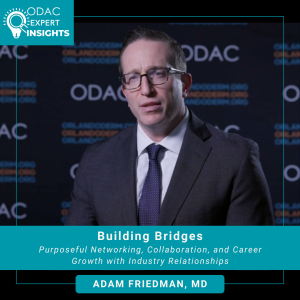
Building Bridges: Purposeful Networking, Collaboration, and Career Growth with Industry Relationships

At the 2025 ODAC Dermatology Conference, Dr. Adam Friedman, co-chair of ODAC, led an essential session for dermatology residents and early career dermatologists on “Building Bridges: Purposeful Networking, Collaboration, and Career Growth with Industry Relationships,” sponsored by Johnson & Johnson.

Working with industry partners has become a crucial career pathway for dermatologists, whether through advisory board positions, research grants, or collaborative opportunities. Dr. Friedman’s session provided actionable strategies for:

  • Understanding different industry contact roles and how to approach them effectively
  • Landing initial partnerships with pharmaceutical and medical device companies
  • Maintaining long-term professional relationships that benefit both parties
  • Navigating ethical considerations when working with industry sponsors
  • Handling situations when opportunities don’t materialize

This session exemplifies ODAC’s commitment to providing practical career development alongside clinical education. The panel featured both early-career and experienced dermatologists alongside industry professionals, offering diverse perspectives on building meaningful industry relationships.

Johnson & Johnson’s sponsorship of this session demonstrates how industry partners contribute to valuable educational content that directly benefits dermatology professionals’ career advancement.

This type of programming showcases why ODAC continues to be the premier dermatology conference for both clinical excellence and professional development, attracting top-tier sponsors who value meaningful engagement with the dermatology community.

Dermatology conference and working with industry

Watch Dr. Friedman share best practices for maintaining long-term relationships and his personal ethics in working with companies. Plus hear his guidance on how to respond if you’re left out of an opportunity.