Tag

ODAC Dermatology Conference

AD and Regional Eczemas: ODAC in the News

By ODAC Sessions

AD and regional eczemas

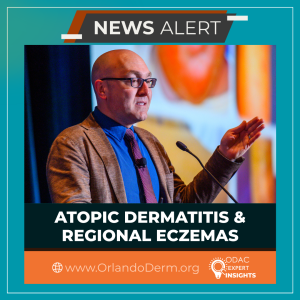
At the ODAC Dermatology Conference, Peter Lio, MD, FAAD, shared an updated, patient-centered overview of atopic dermatitis (AD) and regional eczemas, integrating emerging science with real-world clinical strategies.

As noted in an article by The Dermatology Digest, Dr. Lio emphasized AD and regional eczemas are self-perpetuating disorders involving the skin barrier, immune system, microbiome, and sensory nerves. He outlined the epithelial barrier hypothesis and the concept of epicutaneous sensitization. Early, proactive intervention was framed as essential to preventing chronic inflammation, infections, and subsequent disease.

On therapy, Dr. Lio reviewed the expanding role of non-steroidal topical agents, noting their usefulness in sensitive areas and for patients who want a non-steroidal option. He also reinforced the value of adjunctive strategies such as wet wrap therapy. For systemic treatment, he discussed biologics and oral JAK inhibitors, highlighting evidence that dupilumab can uniquely improve the skin microbiome in moderate-to-severe AD. Shared decision-making was a central theme, with Dr. Lio presenting his ESTAR framework to help align treatment choices with patient priorities, and sharing the importance of written action plans.

Finally, Dr. Lio addressed topical steroid withdrawal as a legitimate and evolving diagnosis. He noted that formal diagnostic criteria are forthcoming, signaling progress toward clearer guidance for clinicians.

Vulvar Dermatology Lessons: ODAC in the News

By ODAC Sessions

vulvar dermatology

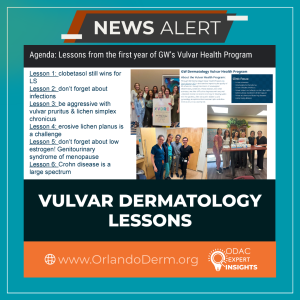
Vulvar disease demands careful exams, patient education, and thoughtful, individualized management. This article by The Dermatology Digest encapsulates Dr. Emily Murphy’s ODAC session on lessons from the vulvar dermatology clinic. Dr. Murphy is a dermatologist and director of the Vulvar Health Program at the George Washington University School of Medicine and Health Sciences.

In the session, Dr. Murphy shared practical, high-yield pearls, addressing vulvar health topics, including lichen sclerosus, underlying infections, and the effects of low estrogen. She outlined six lessons for dermatology clinicians in treating vulvar disease.

Additional news coverage of ODAC is forthcoming. Stay tuned!

Mastering Biologic Access in Dermatology: ODAC Preview

By ODAC Sessions

biologic access

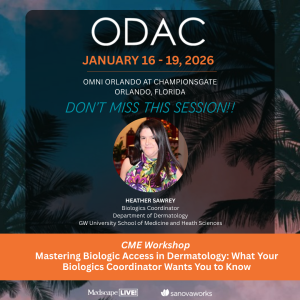
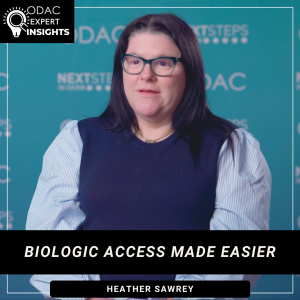
Biologics are effective, but getting access can be a challenge. For smoother starts and fewer insurance roadblocks, attend this 30-minute ODAC CME workshop, “Mastering Biologic Access in Dermatology: What Your Biologics Coordinator Wants You to Know,” on Saturday, January 17, from 5:15-5:45 p.m.

Heather Sawrey, biologics coordinator for the GWU Department of Dermatology, brings 17 years of real-world experience helping patients access biologic therapies. She’ll cover best practices for prior authorizations, patient education, pharma support programs, and how clinical teams can work together to reduce delays. Practical, actionable, and time-efficient — perfect for dermatologists, nurses, and clinic staff. (Aren’t yet registered for ODAC? Register today!)

Dermoscopy Beyond the Basics: ODAC Preview

By ODAC Sessions

dermoscopy

Ready to decode the toughest dermoscopic cases?

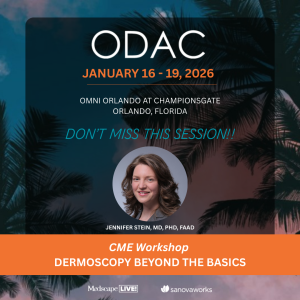
Join Jennifer Stein, MD, PhD, FAAD, for “Dermoscopy Beyond the Basics: Identifying Challenging and Atypical Lesions” on Sunday, January 18, from 3:45–4:30 p.m. at ODAC 2026.

This focused CME workshop will highlight real-world, high-yield approaches to recognizing atypical presentations and improving diagnostic confidence. Perfect for dermatologists and trainees who want practical, clinic-ready strategies. You won’t want to miss it!

Improving Surgical Scars: ODAC Interview

By ODAC Sessions

surgical scars

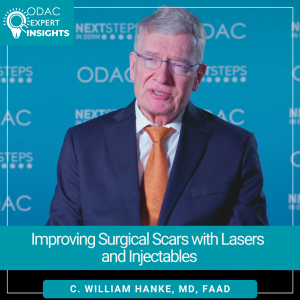
Surgical scars are an unwanted consequence from dermatologic surgery, and one that dermatologists seek to avoid if at all possible. Dermatologic surgeon C. William Hanke, MD, MPH, FAAD, has plenty of experience in preventing and treating surgical scars, and he shared pearls from his session at ODAC 2025 with Next Steps in Derm. Check out this video interview where Dr. Hanke outlines the good surgical technique that’s required to help prevent scars.

Watch as he shares:

  • prevention and treatment techniques in the surgical scar tool kit
  • therapies to consider for different types of scars
  • when excision is the best treatment option

Want more insights from Dr. Hanke? Register for ODAC 2026 and attend his sessions:

  • Dermatologic Surgery for the General Dermatologist: Case-Based Pearls & Techniques – Expert Panel
  • Hedgehog Inhibitors for Basal Cell Carcinoma: Optimizing Use and Overcoming Challenges – Expert Panel

Hedgehog Inhibitors: ODAC Interview

By ODAC Sessions

hedgehog inhibitors

Immunotherapy has radically changed how cancer is treated, including skin cancer. Yet in this age of immunotherapy, is there still a place for hedgehog inhibitors in the treatment tool box?

In this Next Steps in Derm video interview, Vishal A. Patel, MD, FACMS, ODAC’s guest advisor for surgical dermatology, shares the important role that hedgehog inhibitors should still play in cutaneous oncology. Watch as Dr. Patel outlines the two approved medications and how they work. Plus learn what you need to know to choose the best treatment for your patients.

Want more updates in the treatment of skin cancer? Register for ODAC 2026 and attend the following sessions:

  • Hedgehog Inhibitors for Basal Cell Carcinoma: Optimizing Use and Overcoming Challenges – Expert Panel
  • Beyond the Blade: Surveillance, GEP, and Radiation Insights for High-Risk Skin Cancers
  • Cutaneous Oncology Updates: New Approaches to Melanoma and Nonmelanoma Skin Cancers

The skin cancer slate at ODAC 2026 features practical updates from experts in the field, including Dr. Patel, who is the recipient of the 2025 Elaine H. Snyder Cancer Researcher Award, as well as C. William Hanke, MD, FAAD, and David Miller, MD, PhD, FAAD.

Pyoderma Gangrenosum and Sweet Syndrome: ODAC Interview

By ODAC Sessions

neutrophilic dermatoses

Neutrophilic dermatoses aren’t commonly addressed in dermatologic continuing education, yet understanding how to diagnose these dermatoses is important. An accurate diagnosis could reveal an underlying autoinflammatory disease.

Watch this Next Steps in Derm video interview with Anthony Fernandez, MD, PhD, FAAD, from ODAC 2025, where he addresses the most common neutrophilic dermatoses that a dermatologist will see in clinic: pyoderma gangrenosum and Sweet syndrome.

Dr. Fernandez shares criteria for making an accurate pyoderma gangrenosum diagnosis. Learn treatment options and why wound healing expertise is key when managing these patients. Find out why Dr. Fernandez says treating Sweet syndrome may be easier than treating pyoderma gangrenosum. Plus hear about a late-onset, autoinflammatory disease that may be an underlying disease in certain patients who present with rashes that are consistent with Sweet syndrome.

Register for ODAC 2026 for more medical dermatology updates.

Patient Buzz: Skin Care After GLP-1 Weight Loss

By Patient Care

skin care after GLP-1 weight loss

GLP-1 agonists are a popular method of losing weight, which is leading to patient questions about skin care after GLP-1 weight loss. In this Next Steps in Derm Patient Buzz, Heather Woolery-Lloyd, MD, FAAD, outlines skincare ingredients that can address skin laxity and textural changes from losing a significant amount of weight. She also addresses in-office procedures and when to refer a patient to a plastic surgeon. Find out her approach with patients who are experiencing significant weight loss and why it’s important to set realistic expectations with patients.

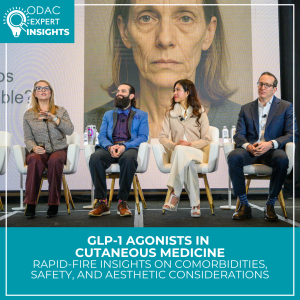
GLP-1 agonists are increasingly used by dermatologists to address comorbidities from inflammatory skin diseases. For more on their dermatologic use, attend the ODAC session, “GLP-1 Agonists in Cutaneous Medicine: Rapid-Fire Insights on Comorbidities, Safety, and Aesthetic Considerations – Panel Discussion”. Register today!

Improve Quality of Life in Patients With Hyperhidrosis

By Medical Dermatology

hyperhidrosis

Hyperhidrosis affects nearly 400 million people worldwide, yet it’s often misunderstood and underdiagnosed. In fact, 27% of adults never receive a diagnosis, according to the International Hyperhidrosis Society. The condition greatly impacts a person’s quality of life: People with excessive sweating face nearly three times the risk of anxiety and depression.

November is Hyperhidrosis Awareness Month. Let’s bring excessive sweating out of hiding and help people find understanding and treatment.

Join us for the ODAC Pre-Conference Virtual Symposium on Tuesday, November 11, where dermatologist Dr. Angela Lamb will share strategies and new tools to improve quality of life in patients with excessive sweating. You’ll also experience case-based sessions on chronic itch, hidradenitis suppurativa, and pediatric alopecia areata. Registration is complimentary – plus you can earn CME!

We hope to see you at this interactive event that’s sure to provide you with practical takeaways you can immediately apply in clinic.

Improve your knowledge and provide hyperhidrosis patients with hope and healing.

What’s New in Rosacea: Interview with Dr. Adam Friedman

By ODAC Sessions

rosacea

ODAC Co-Chair Adam Friedman, MD, FAAD, says he’s changed the way he approaches rosacea due to some nuances in recently published studies.

Watch this Next Steps in Derm video interview with Dr. Friedman from ODAC 2025 where he addresses what’s new in the understanding of rosacea triggers. Does current research support the longstanding guidance to avoid coffee? Plus learn Dr. Friedman’s top strategies for managing rosacea and find out about three recently FDA-approved rosacea therapies.

Don’t miss Dr. Friedman’s rosacea session at ODAC 2026 where he’ll address more new developments and practical approaches. Register today!